
Montage builds kitchens using a different method than many other large manufacturers. Below is a clear comparison of the two most common production approaches used in kitchen manufacturing, and why our method matters.
Two Common Ways Kitchens Are Made
1. Production Line Approach
This method breaks a kitchen into small tasks. Each staff member repeats the same job all day — for example, assembling drawers, fitting hardware, or building cabinet boxes.
Pros
Faster overall output
Well suited to high-volume, standardised kitchens
Lower labour cost per unit
Cons
Quality can be missed when speed is the main focus
Staff only learn one narrow task
Little understanding of how the full kitchen fits together
Repetition can lead to lower job satisfaction
Finished kitchens can show small inconsistencies where multiple people have worked on the same job (different sanding, edging, or finishing styles)
This approach works for mass-produced cabinetry, but it often comes at the cost of long-term skill development and finish consistency.

2. One Joiner Per Job (or Per Room)
With this approach, one joiner is responsible for a full kitchen, or a full room within a large project. They see the job from start to finish.
Pros
Strong consistency across the whole kitchen/project
One clear standard of sanding, edging, and finishing
Joiners build a wider skill set
Better suited to complex or custom designs
Greater ownership of the finished result
Cons
Can be slower than a production line
Does not benefit from highly optimised, single-task workstations
Labour cost can be higher
While it may take longer, this method produces more capable joiners over time. That means better outcomes for complex layouts, detailed cabinetry, and custom solutions in future projects.
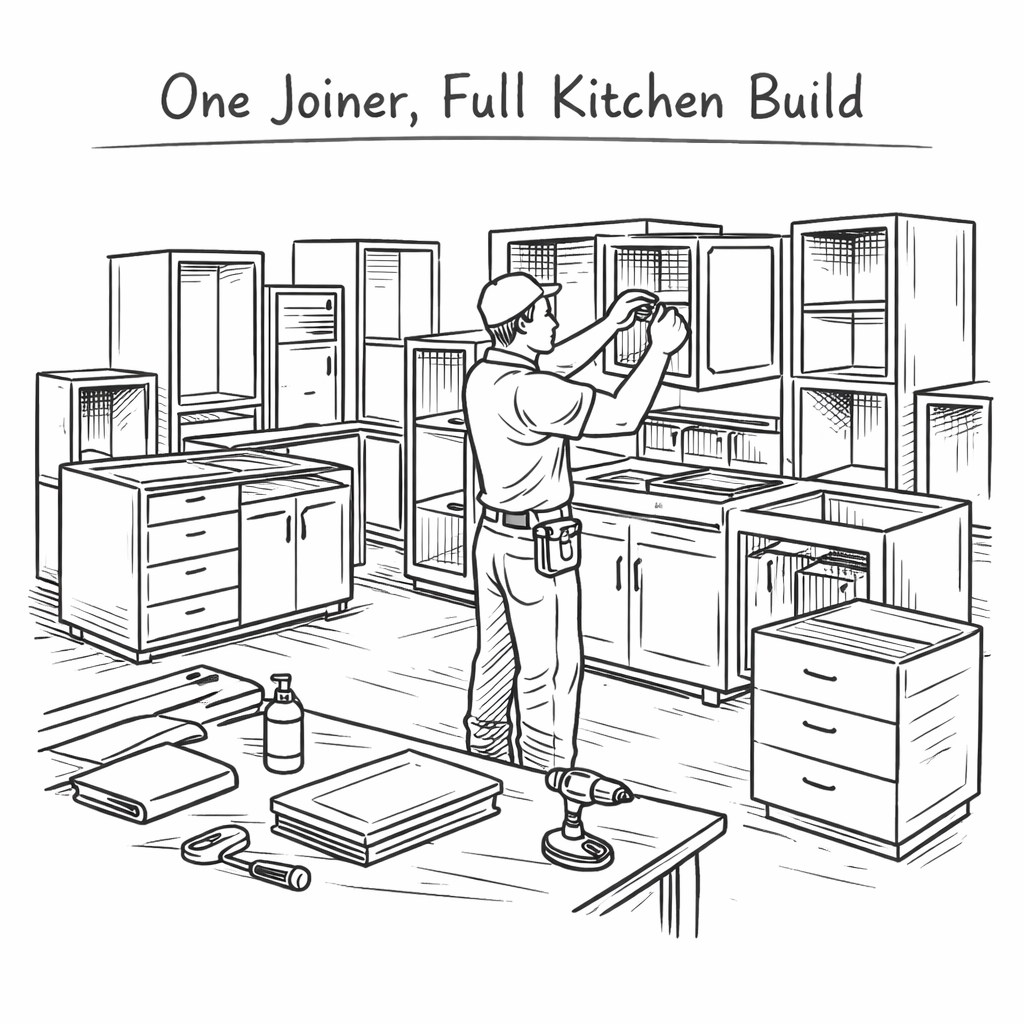
Why Montage Uses The "One Joiner" Approach - And What This Means For You
At Montage, we avoid a production line for kitchen assembly. We aim for one joiner per job (or per room on larger projects.)
This does mean our pricing can be slightly higher than companies running fast assembly lines. But in return, you get:
A consistent finish across your entire kitchen
Fewer compromises made for speed
Work completed by skilled joiners who are responsible for the end result
Confidence that your kitchen has been built with care and attention
You are also supporting a bespoke joinery business that develops skilled tradespeople, rather than relying on narrow, repetitive factory roles. This in turn helps to ensure that we’ve got skilled tradesmen able to take on complex projects and help to plan or problem solve one-of-a-kind joinery projects in the future.


